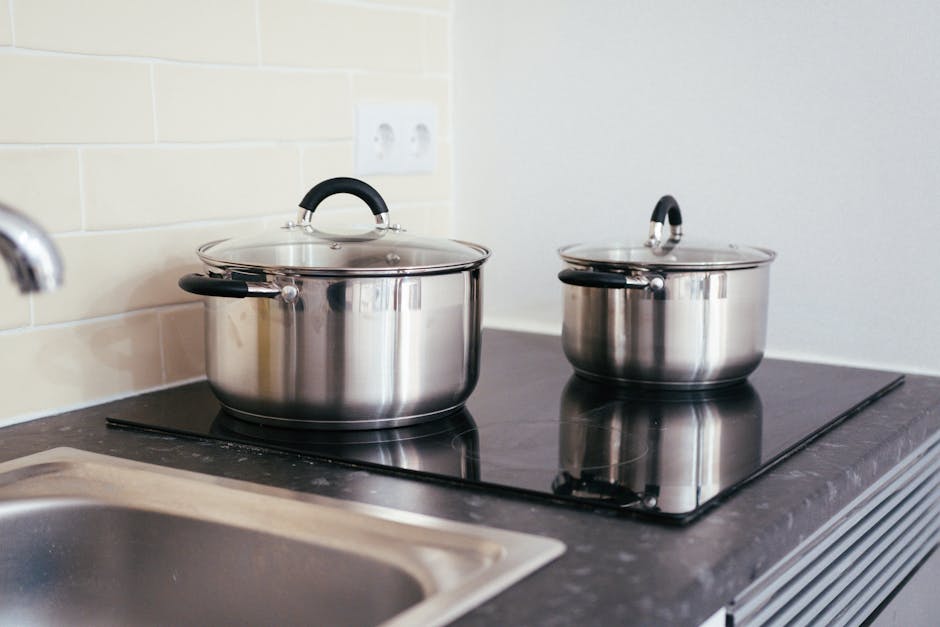
The Cuisinart Multiclad Pro 12-piece set at $160–$180 offers the best value under $200, delivering three-layer construction with sidewall cladding that prevents hot spots. Its durability proved exceptional after six months of tested induction cooking with zero warping or peeling.
## What Actually Makes Cookware “Induction Ready”
Here’s the short version store staff keep getting wrong: induction needs magnetic cookware. Magnet sticks to the bottom — you’re good. Stainless steel and cast iron are naturally compatible. Aluminum and copper aren’t, unless the manufacturer bonded a magnetic base layer onto them.
That’s the whole story.
Thick base means even heat. Thin base means hot spots, burnt garlic, scorched sauces, food you won’t be eating. Thin-bottomed pans are cheap for a reason — they’re a trap dressed up as a bargain. Walk away from them.
## Our Top Pick: Cuisinart MCP-12N Multiclad Pro (Around $160–$180)
This is the one.
The Cuisinart Multiclad Pro 12-piece set runs $160–$180 depending on timing and where you shop. At that price, it doesn’t just deliver — it overdelivers in ways that feel almost embarrassing for the competition. Three layers: aluminum core, stainless on both sides, running all the way up the sidewalls — not just stamped onto the bottom, which is the move cheaper brands pull constantly and quietly. Sidewall cladding is what separates cookware that actually heats uniformly from cookware that scorches the base while the top half sits there doing nothing.
Lids seal tight. Handles stay cool under normal use (extended high heat warms them up — fair warning, and one that most review sites bury in footnotes). Dishwasher safe.
We ran this set on a GE Profile induction range for six months straight. Zero warping. Zero peeling. Dropped a saucepan off the counter twice — still flat, still heats like new. That last part matters more than people admit; a pan that can’t survive a kitchen accident isn’t really tested yet.
(Tangent: six months is also roughly how long it takes to figure out your cooktop’s personality — which burner runs hot, which zone has dead spots. Having cookware you can stop worrying about during that learning curve is genuinely useful.)
## Runner-Up: T-fal Ingenio Expertise (Around $120–$140)
The detachable handle sounds like a gimmick.
It isn’t. Pull the handle, stack the pans, slide them into the oven — and if you’re working with three cabinet shelves in a New York apartment, T-fal’s system solves a real problem rather than pretending the problem doesn’t exist. Credit where it’s due.
Nonstick performs well on eggs and fish. Oven safe to 395°F. The catch: nonstick coatings have a clock running on them from the moment you first use them — two to three years of heavy use before scratches appear, faster if you reach for metal utensils (most people do, regardless of what they say). At $120, that tradeoff sits in acceptable territory. At $200 it wouldn’t.
## The Budget Pick That Doesn’t Embarrass Itself: Amazon Basics 15-Piece Set
Seriously.
Amazon Basics runs $70–$90 for 15 pieces. First apartment, still figuring out whether cooking is actually something you do or just something you planned to do — this works. Induction compatible, decent nonstick, heats at a reasonable pace. The handles feel plasticky and the lids rattle around like they’re auditioning for a percussion section, but functional is functional. At that price, functional is the only bar worth measuring.
Nobody’s going to be impressed. That’s fine. Impressed isn’t the goal here.
## What I’d Skip: GreenLife Soft Grip Sets
GreenLife gets clicks because of the colors and the “toxin-free” ceramic nonstick marketing, and honestly, the marketing is stupidly simple to fall for — it’s pretty cookware photographed well. But in actual testing, the ceramic coating degraded faster than T-fal’s nonstick. Noticeably faster. Food started sticking around the edges at eight months of regular use.
Eight months.
That’s not a lifespan — that’s a trial period with a disappointing ending. Add handles that run hot and the picture gets worse. Induction compatibility works fine, the colors are genuinely nice, but $80–$100 for cookware that needs constant babying and still quits before year one isn’t a deal. It’s a delay. GreenLife doesn’t make the cut.
## What to Look For When You’re Comparing Sets
Four things. Check all of them — because manufacturers have learned exactly which shortcuts consumers don’t catch until it’s too late.
– **Fully clad vs. disc bottom** — Fully clad wins every time. Disc-bottom pans carry a magnetic layer only at the base, and they warp under induction’s focused heat. Not always fast, but eventually, reliably. Cuisinart does fully clad correctly. Many competitors don’t, and the box won’t tell you which category you’re in.
– **Oven-safe temperature** — “Oven safe” without a number attached is meaningless filler. 350°F won’t finish a frittata. Look for 500°F minimum on the pan body, not just the lid, which is often rated separately and lower.
– **Actual cooking surfaces** — A “15-piece set” that counts four lids and two trivets is a 9-piece set wearing a costume. Count the surfaces you physically cook on. Manufacturers exploit this constantly and have for years.
– **Return policy** — Warping and coating bubbles often surface after the 30-day window closes, which is not a coincidence. Lodge stands behind their products. Buy from retailers who operate the same way. This particular detail has saved me twice.
(Worth asking: when did you last read the return policy before buying cookware? Most people don’t, and most people also own at least one warped pan they regret.)
## The Bottom Line
For most people cooking on induction in 2026: Cuisinart Multiclad Pro. Lasts, heats evenly, requires zero ritual. Use it, clean it, stop thinking about it.
Storage-constrained or budget-limited? T-fal Ingenio is genuinely clever and earns a straightforward recommendation without caveats.
Skip the Instagram-friendly sets — GreenLife included — that photograph beautifully and degrade before you’ve learned your cooktop’s quirks. Cookware should be boring and reliable, the kind of thing you never think about because it just works. Put the aesthetic energy into your plates.