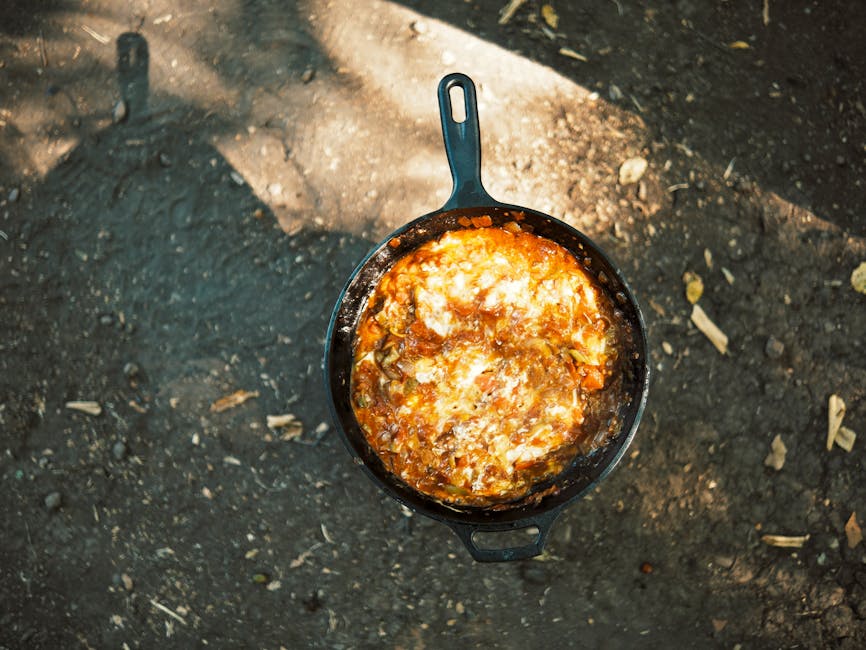
Restore a rusty cast iron skillet by scrubbing hard with steel wool and dish soap, then seasoning with Crisco shortening or flaxseed oil in a 400°F oven. Even pitted surfaces cook excellently and don’t need to be perfectly smooth—most restoration guides oversell specialty products when basic supplies work just fine.
## First, Assess the Damage
Not all rust is the same. Surface rust—that orange, powdery coating from leaving a pan wet one too many times—scrubs off in ten minutes. Pitting is the thing that actually requires thought. Run your finger across the cooking surface. Feel craters? Actual holes eaten into the iron? That’s deep corrosion, and while it’s still fixable, the surface won’t come back glassy-smooth. It’ll be slightly cratered for life.
Here’s what nobody tells you: that doesn’t matter for cooking. A pitted Lodge still outperforms a brand-new nonstick at 400°F. The texture obsession is mostly aesthetic anxiety from people who’ve never actually cooked on cast iron.
## What You’ll Actually Need
Skip the specialty products. No Bar Keepers Friend, no electrolysis tank, no $25 “cast iron restore” kits—and I’ve bought one of those kits. It was a spray bottle of diluted acid, a piece of steel wool, and a folded card with “instructions.” Twelve bucks of margin on six dollars of stuff. Here’s what actually works:
– Steel wool or a chain mail scrubber (the Ringer, roughly $30, lasts indefinitely)
– Dish soap
– Warm water
– A regular oven
– Crisco shortening or flaxseed oil
– Paper towels
That’s the whole list. Anyone selling you beyond this is running a grift.
## The Scrubbing Phase (Don’t Be Gentle)
Look, this is where people fail. Not because they use the wrong product—because they’re timid. They treat a rusted pan like a patient in recovery when they should be treating it like a dirty boot.
Get it wet, squirt in some dish soap, and scrub hard with steel wool. The soap myth—that modern dish soap destroys seasoning—is decades-old misinformation from the era when soap actually contained lye. Dawn doesn’t contain lye. It will not hurt your pan. Scrub until you’ve cleared all visible rust and every fleck of black residue, then rinse and go again if needed.
For stubborn rust, a 50/50 white vinegar and water soak does real work—but set a timer for 30 minutes and mean it. Vinegar is acidic enough that if you wander off and forget, you come back to a pan that now has *new* pitting where there wasn’t any before. Learned that on a Wagner No. 8 I still feel bad about.
Rinse thoroughly, then put the pan directly on a burner over low heat for three to five minutes. You want every molecule of water gone before the next step. Residual moisture at this stage and you’ve just reset the clock to rust.
## Seasoning Is Everything — Do It Right
Honestly, most guides are going to tell you vegetable oil and leave it at that. That’s lazy advice. Vegetable oil works—technically—but it goes rancid faster, takes more coats to build anything durable, and the polymerized layer it leaves behind is softer. Flaxseed oil bonds to iron at high heat in a way that’s chemically different. The finish is noticeably harder. Crisco shortening is the practical middle ground—cheap, stable, and the solid consistency makes it almost impossible to over-apply.
Coat everything—inside, outside, the handle, the underside—with your chosen fat. Then wipe almost all of it back off. This is the step people get wrong. Too much oil and you get a gummy, tacky surface that never fully cures and feels awful to cook on. The pan should look practically dry when you’re done wiping. If it looks oiled, you’ve left too much.
Flip it upside down in a 450°F oven. Foil on the rack below. One hour. Let it cool completely inside the oven—don’t crack the door, don’t pull it out early. That’s one layer. Do this three to four times consecutively on a freshly restored pan and you’ll have a real foundation, not just a cosmetic coating that chips off the first time you cook eggs.
## Ongoing Maintenance (So You’re Not Back Here in Six Months)
The best maintenance is cooking bacon in it. Seriously—fat from bacon, burgers, anything with decent lipid content builds seasoning naturally, and the cumulative effect over months of real cooking beats anything you can do in an oven in an afternoon. After each use: hot water rinse, light scrub if there’s anything stuck, burner dry for two minutes, thin wipe of oil before storing.
Never soak it. Never leave it in the dish rack wet while you watch something. Never store it in that one cabinet where your building’s humidity mysteriously concentrates—you know exactly which cabinet I mean.
## Brands Worth Knowing
Lodge is the reliable workhorse—American-made, $30–$45 for a 10-inch, widely available, and the rough factory texture that everybody complains about smooths out after a few months of real use. The rough texture is a genuine flaw, but it’s a flaw you cook through, not around.
Griswold and Wagner are the vintage brands worth hunting. Their cooking surfaces were machined smooth at the factory—we’re talking a glass-like finish that Lodge simply doesn’t produce—and a decent Griswold No. 8 found at an estate sale for $20 will outperform a brand-new anything. I’d take a beat-up Griswold over a pristine modern pan without hesitation. The only catch is that “decent price” is doing a lot of work in that sentence. Griswold prices on eBay have gotten stupid.
Stargazer is a newer American brand doing machined surfaces for people who want that quality without the thrift store lottery. Around $95 for a 10.5-inch—expensive, but you’re genuinely paying for the surface finish, not just a logo.
Avoid no-name pre-seasoned skillets on Amazon under $25. That factory seasoning is sprayed-on junk; you’ll be stripping and redoing it within the first week. The pan itself is often uneven in thickness and warps under high heat. Just buy a Lodge and skip the detour entirely.
—
A rusty skillet isn’t a problem. It’s a Saturday afternoon. The whole restoration costs nothing if you already own vinegar and Crisco, takes maybe 90 minutes of active effort spread across a day, and leaves you with a pan that will genuinely outlive you if you don’t leave it wet. That $3 garage sale Lodge I started with? Still on my stovetop. Still gets used almost every day. Best three dollars I’ve ever spent on anything in a kitchen.