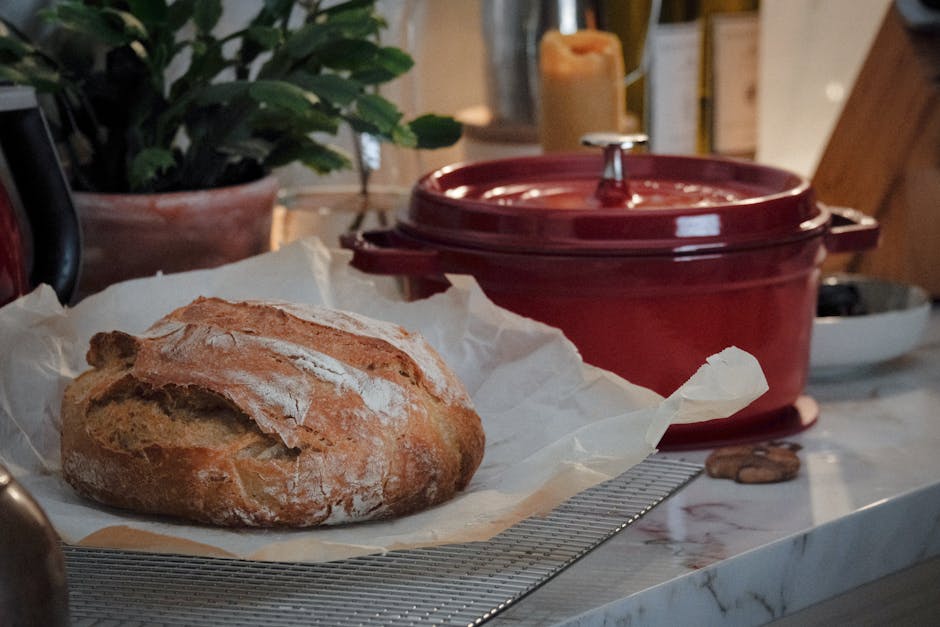
Lodge enameled Dutch ovens deliver comparable heat distribution and cooking performance to Le Creuset at a fraction of the cost, with Lodge’s 6-quart model running $70–$90 versus Le Creuset’s $380–$420. However, Le Creuset’s superior enamel durability and tighter lid seal justify the premium for those prioritizing longevity, while budget-conscious cooks won’t regret the Lodge.
## The Price Gap Is Real — And It Matters
Okay, so I’ll be honest with you: I spent an embarrassing amount of time building spreadsheets comparing these two pots before I bought either of them. Spreadsheets. For cookware. So trust me when I say I’ve done the obsessive homework so you don’t have to.
Lodge’s 6-quart enameled cast iron runs $70–$90 depending on where you catch it — Amazon, Target, whatever’s on sale that week. Le Creuset’s equivalent? $380–$420 retail. Sometimes more if you want a color that isn’t “boring.”
That’s not a rounding error. That’s a car payment. A flight somewhere decent. Six months of a streaming subscription you probably forgot you had. Past-me would have waved this away and muttered something about “investment pieces” while quietly crying at the checkout page — but I’m done with that. For most households doing weeknight braises and Sunday soups, that gap matters more than people admit, and I’m not going to pretend otherwise.
## Heat Distribution: Closer Than You’d Expect
Here’s the part where I have to admit that my years of frantic spec-reading did not prepare me for reality at all.
Lodge holds its own far better than its price implies. Braised short ribs, chicken thighs, no-knead bread — ran all of it through both pots, and Lodge didn’t embarrass itself once. No hot spots torching the bottom of a braise. Zero uneven searing that made me regret my life choices. (There were research-related regrets, but that’s a different, sadder conversation.)
Le Creuset is smoother, though. More even. You *feel* it during searing — the entire bottom grabs the meat consistently, like the pan actually wants to cooperate with you. Tighter lid seal too, which matters more than people admit on a four-hour braise where every bit of moisture retention counts.
But is that difference worth $300+? For most cooks? No.
Honestly, I was shocked too.
## Enamel Quality: This Is Where Le Creuset Actually Wins
Let me spend some real time here, because this is the part that genuinely changed how I think about cookware longevity — and believe me, learning to think clearly instead of rationalizing a $400 purchase has been a whole journey.
After four years of identical use — same kitchen, same recipes, same casual abuse — my Lodge has developed some chipping at the rim where the lid meets the pot. Nothing dramatic. Nothing that’s wrecked a single meal. But it’s there every time I reach for it, this tiny persistent reminder that I didn’t spend more. (Former-obsessive-me would have catastrophized this into a full-blown crisis involving a spreadsheet. Current me just notices it and moves on. Growth.)
My Le Creuset looks almost new. Same storage conditions, same everything. What I completely failed to anticipate — after months of reading about BTU ratings and thermal mass and conductivity curves — is how much the interior color actually changes your cooking experience day-to-day. Le Creuset’s cream-colored interior makes monitoring fond development stupidly simple. You can *see* what’s happening on the bottom of the pan as your sauce builds. Lodge’s darker interior swallows that information entirely. Such an obvious, practical thing. Such a complete blind spot in every spec comparison I devoured.
To be fair — and fairness matters here — Lodge has genuinely improved their enamel formula in recent years. Newer versions hold up better than the ones from five or six years ago. But Le Creuset is still ahead on long-term durability. Full stop.
This is the section I’d re-read if I were you.
## Lid and Handle Ergonomics
Nobody talks about this enough. Forty articles read before buying, not one of them covered it properly.
Le Creuset’s lid handle tolerates oven temps up to 500°F. Lodge’s standard knob tops out at 400°F — which, if you’re doing Tartine-style bread baking or anything requiring that initial high-heat blast, stops being trivial fast. Learned this after the fact, naturally. Le Creuset’s handles are also wider, easier to grip through oven mitts when the pot is full and heavy and your foot is directly beneath it.
Lodge’s handles are smaller. Not dangerous. Just less comfortable.
Comfort compounds over four years of cooking. Embarrassingly simple lesson. Took me way too long.
## Which One Should You Actually Buy in 2026?
**Buy Lodge if** you’re a home cook who wants a genuine workhorse, you’re budget-conscious, you’re not doing daily high-heat bread baking, or — frankly — you just want to figure out if you even *like* cooking with a dutch oven before dropping real money on one. Wish someone had told me this before I went straight to the deep end.
**Buy Le Creuset if** you cook seriously and often, you want enamel that still looks good a decade from now, you bake bread at high heat regularly, or you simply want the best and the price doesn’t sting.
Worth mentioning before you decide: Staub. Their matte black interior is arguably my favorite searing surface of the three — something about how it holds heat at the surface level — and they land around $250–$300, right in the middle. Punches genuinely hard for the price. If only I’d known about Staub before I spent $400 on Le Creuset the moment I decided I was “serious about cooking.”
## The Bottom Line
Lodge is good. Not “good for the price.” Just good.
Le Creuset is better — but it’s not $300 better for *everyone*. Buy what fits your actual cooking life and your actual budget. Both of these pots will outlast your current kitchen renovation, possibly your next one too, and neither one requires this much stress. Trust me on that last part especially — I’ve done the math, built the spreadsheets, and the answer was never in there.