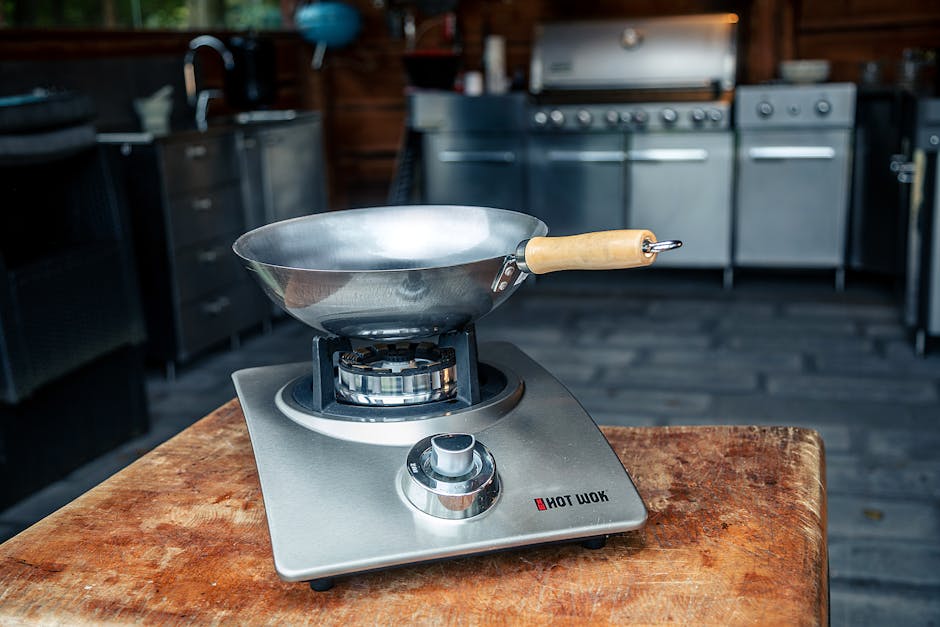
Flat-bottom woks work best on electric stoves because they maximize surface contact with the heat source, unlike traditional round-bottom designs. The Craft Wok Traditional Hand Hammered carbon steel model at $40–$50 is the top pick for serious home cooks, offering instant heat response and durable performance.
## Why Electric Stoves Make Wok Cooking Harder (And What to Do About It)
Let’s just be real about the problem upfront.
Gas stoves throw out 35,000+ BTUs and wrap flame around a round-bottom wok like the two were literally designed for each other — because, well, they were. Electric coil and glass-top burners max out somewhere around 2,000–3,000 watts, sit completely flat, and heat up like they’ve genuinely got somewhere more important to be. A round-bottom wok just rocks on that flat surface, loses contact with the heat source, and gives you one scorching hot spot in the middle while everything else stays lukewarm. Used one that way for an embarrassingly long stretch before someone set me straight.
The fix is actually pretty simple.
**Flat-bottom wok.** Full stop. The traditionalists are already typing furious comments about round-bottom being the only authentic path — and they’re not wrong, if you’ve got a commercial gas range. For the rest of us standing in front of an electric burner like normal people, flat-bottom woks maximize surface contact and make stir-frying genuinely possible. That’s not a compromise. Physics, doing its thing.
One more thing worth flagging: if you’ve got a glass-top or ceramic stove, you need to be careful about what you’re dragging across that surface. Finding out what “scratched beyond repair” looks like on a Tuesday evening is not a good time. More on that below.
—
## The Best Woks for Electric Stoves: My Top Picks
Here’s a comparison of woks I’d actually stand behind — not pulled from spec sheets I’ve never touched.
| Wok | Material | Bottom | Best For | Price Range |
|—|—|—|—|—|
| **Craft Wok Traditional Hand Hammered** | Carbon Steel | Flat | Serious home cooks | $40–$50 |
| **Joyce Chen Classic Series** | Carbon Steel | Flat | Beginners, everyday use | $30–$40 |
| **Lodge Cast Iron Wok** | Cast Iron | Flat | Slow-heat electric coils | $50–$60 |
| **Calphalon Nonstick Wok** | Hard-anodized aluminum | Flat | Easy cleanup, light use | $45–$70 |
| **YOSUKATA Carbon Steel Wok** | Carbon Steel | Flat | High-heat performance | $50–$65 |
| **T-fal Nonstick Wok** | Aluminum/nonstick | Flat | Budget option, beginners | $25–$35 |
My personal daily driver — the one that’s basically lived on my stove since I got serious about this — is the **Craft Wok**. Fourteen inches, hand-hammered, and after months of regular use it’s developed a deep dark patina that I’m honestly kind of proud of in a way that might be slightly unhinged. The wooden handle stays cool even when the pan is absolutely ripping hot. Carbon steel responds to temperature changes almost instantly, and I paid around $45 for it. Dropped this thing off my counter twice (both times embarrassing, neither time intentional) and it didn’t flinch once. “Solid” doesn’t begin to cover it.
—
## Carbon Steel vs. Cast Iron vs. Nonstick: Which Material Wins?
This is my favorite section to write because people genuinely overthink it to a degree that matters more than they’d admit — the wrong material choice accounts for probably half of all “my stir-fry never comes out right” complaints I’ve heard over the years.
**Carbon steel** is my answer 95% of the time, no hesitation whatsoever. Heats fast, responds almost immediately when you adjust the burner, gets measurably better with every single cook, and won’t wreck your wrist halfway through dinner. The Joyce Chen and Craft Wok both show what carbon steel can do when you give it time and attention. The downside — a real one I won’t pretend away — is that seasoning and complete drying after every wash is non-negotiable. We’re talking maybe a few extra minutes of attention per use.
Worth every second of it.
**Cast iron** genuinely excels specifically on electric stoves, because it holds heat in a way that compensates beautifully for a slower burner. The Lodge wok is a legitimately great pan. But here’s the thing — it weighs 8 to 10 pounds of dense iron, and tossing vegetables in a cast iron wok isn’t really a cooking technique so much as an unscheduled bicep workout. Went through a cast iron phase. My left shoulder still has opinions about it.
**Nonstick** is the easy path, and there’s nothing wrong with easy. T-fal and Calphalon options are beginner-friendly, forgiving, require zero seasoning ritual — you just cook and move on with your life. The catch is that nonstick coatings genuinely don’t love sustained high heat, and high heat is kind of the whole point of stir-frying. Here’s something I actually do though: I reach for my nonstick wok regularly for eggs, delicate fish, lighter sautés. That’s where it earns its place on the shelf. For a full-blast stir-fry? Never touched it for that purpose, not once, and I never will.
—
## What Size Wok Should You Get for a Home Electric Stove?
Everyone knows this: bigger isn’t always better. Got my first wok embarrassingly wrong on size, so I’ll keep this short.
Most home electric burners run 8 to 10 inches in diameter. A 16-inch wok sounds impressive until you realize you’re heating the middle third of it and the rest just hangs there, cold, silently judging your life choices. **Twelve to 14 inches** is the genuine sweet spot — enough cooking surface for 2–4 people, but not so large that your burner loses the race to keep up. Cooking solo or for two? Twelve inches is plenty and noticeably easier to maneuver. Family of four or five? Go 14 and don’t look back.
—
## How to Season and Care for a Carbon Steel Wok on an Electric Stove
New carbon steel woks arrive coated in factory oil that absolutely must come off before anything else happens. Scrub with hot soapy water — the only time soap will ever touch this pan, so savor it — rinse thoroughly, dry completely. Set it on your largest burner over medium-high until it just starts to smoke. Add a thin layer of high-smoke-point oil (flaxseed, grapeseed, or plain vegetable oil all do the job), wipe it around with a folded paper towel, and let it smoke off. Repeat three or four times.
After that initial seasoning?
No soap. Ever. Hot water, a stiff brush or chain mail scrubber, immediate drying. After every single wash, mine goes back on a low burner for about 30 seconds just to guarantee it’s bone dry before storage — maybe slightly paranoid, but that paranoia has served me well and I’m not changing anything. The whole routine takes maybe 10 minutes. Weirdly meditative after a long day. Make of that what you will.
The more you cook with it — especially fatty proteins like chicken thighs or beef — the better that patina develops. Six months in, mine behaves practically like nonstick without a single chemical coating anywhere near it. That payoff is *so* satisfying after all the careful washes, and honestly it’s the main reason I’d steer every new wok buyer toward carbon steel over everything else without a second thought.
Have you ever cooked with something that genuinely got better the more you used it? Carbon steel is one of the few kitchen tools that actually works that way.
—
## Common Mistakes People Make When Using a Wok on Electric
A few habits that’ll save you from a whole lot of mediocre stir-fries. Every single one of these I’ve personally committed, some of them multiple times.
**Don’t overcrowd the wok.** Honestly responsible for more ruined stir-fries than any equipment problem could ever be — too much food tanks the temperature immediately, moisture escapes, and suddenly you’re steaming everything in a sad lukewarm pool. Cook proteins first, set them aside, do vegetables separately, bring everything together at the end. Takes longer but the difference is night and day.
**Preheat longer than feels reasonable.** Electric burners are slow and they genuinely don’t care about your dinner timeline. Give the wok a full 3 to 4 minutes on high before anything goes in — flick a single drop of water into it, and if it evaporates instantly with a sharp pop, you’re ready. If it just sort of sits there sizzling sadly… keep waiting.
**Use the right oil.** Learned this one via smoke alarm, which is an effective teaching method if not a pleasant one. Olive oil in a screaming-hot wok is a bad time — my smoke detector and I came to an understanding that day. Avocado oil (smoke point around 520°F), peanut oil, or refined vegetable oil belong in this pan.
**Never use metal utensils on nonstick.** Wooden or silicone spatulas only, full stop. Scratched a perfectly good nonstick wok in my first year by grabbing a metal spatula out of pure muscle memory without thinking. Now my metal spatulas live in a completely separate drawer as a physical barrier between my brain and that mistake. Works surprisingly well.
—
## Frequently Asked Questions
**Q: Can I use a round-bottom wok on an electric stove?**
A: Technically yes. Practically, it’ll rock around, heat unevenly, and require a wok ring that still limits burner contact in a pretty significant way. Tried the wok ring approach for longer than I should have — stubbornly, out of some misguided commitment to tradition. Just get a flat-bottom wok. Dramatically easier experience across the board.
**Q: Is a carbon steel wok safe on a glass-top electric stove?**
A: Yes, with real caveats. Never slide or drag it — lift it every single time you move it. The textured surface on a hand-hammered wok can scratch glass tops over time, which is a terrible thing to discover after the fact. For glass-top surfaces, smooth-bottom carbon steel like the Joyce Chen Classic is a smarter choice and I’d steer you there pretty firmly.
**Q: What’s the minimum wattage burner that can stir-fry properly?**
A: At least 2,000 watts on your largest burner to make this work. Most modern electric ranges hit 2,400 to 3,000 watts on the biggest coil, which is workable if not ideal. Older ranges stuck at 1,500 watts will genuinely struggle — cooking is still possible, but smaller batches stop being optional and become mandatory.
**Q: How often do I need to re-season my carbon steel wok?**
A: Cook with it regularly, dry it properly after every wash, and it’s building seasoning on its own — you’re essentially seasoning it a little every time you use it. A full stovetop re-season maybe twice a year at most is all mine gets. Patchy spots or noticeably more sticking are your signals to do a proper re-season, and it’ll come right back.
**Q: Are nonstick woks worth it for electric stoves?**
A: For low-to-medium heat cooking, honestly yes — convenient, forgiving, zero maintenance ritual. But for genuine high-heat stir-fry results, that slightly smoky wok char that makes restaurant food taste the way it does… nonstick can’t get you there. The coating degrades with sustained high heat, and you’ll taste exactly the difference.
**Q: What’s the best budget wok for an electric stove?**
A: The **Joyce Chen Classic Series** at $30–$35 is genuinely good for the price — carbon steel, flat-bottomed, lightweight, with a helper handle that actually does its job. Not as thick or satisfying to hold as the Craft Wok, I won’t pretend otherwise. Performs well though, and it won’t sting if you’re still figuring out whether wok cooking is going to become your thing. (Spoiler: it probably will.)
—
## Wrapping Up
For most people cooking on an electric stove, the **Craft Wok Traditional Hand Hammered** is where I’d point you without hesitating — great price, real carbon steel, and it builds into something you’ll genuinely want to cook with every single day. Lower maintenance without the seasoning commitment? The **Calphalon nonstick** is a solid runner-up for lighter cooking situations.
But the real takeaway is simpler than any specific product: flat bottom, right size (12–14 inches), patience during preheat. Do those three things consistently, and electric stir-fry stops being the frustrating disappointment you sort of endure and becomes something you’re actually excited to throw together on a random Tuesday night.
That’s the good stuff.