Best Pasta Pot for Boiling: Real Picks That Save Counter Space
If you're making pasta three nights a week like I am, your pot situation matters more than you think. The wrong pot means unevenly cooked noodles, a boil-over disaster on your stovetop, and a cabinet that looks like it survived a cookware avalanche. I've used a lot of pots, owned some bad ones, and narrowed it down to a handful that actually earn their shelf space.
Heads up: some links below are affiliate links — if you buy, we get a small cut at no extra cost to you.
What Actually Makes a Good Pasta Pot
Let me skip the fluff. Most pasta pot articles talk about "even heat distribution" like you're slow-cooking a braise. You're boiling water. The heat distribution conversation matters a lot less here than it does with a sauté pan.
What actually matters for a pasta pot:
- Capacity. For a pound of pasta, you want at least 6 quarts. I'd honestly say go 8. Cramped water = sticky, clumpy pasta. That's just the truth.
- A tight-fitting lid. Water boils faster with the lid on. This isn't a debate.
- Weight when full. An 8-quart pot full of water weighs close to 20 pounds. A heavy stainless steel pot adds even more to that. If you're draining over a sink, you need something you can actually lift.
- A strainer insert or perforated basket. This is the single biggest quality-of-life upgrade. You lift the pasta out instead of hauling the whole pot to the sink. More on this below.
- How it stacks. If it nests inside your other pots or has a lid that doubles for another pot, you're winning on cabinet space.
That's it. Those five things. Everything else is marketing.
My Top Picks for the Best Pasta Pot for Boiling
Here's where I get specific. I've cooked with all of these — some I own, some I've cooked with at friends' places, one I returned and will tell you why.
Cuisinart Chef's Classic 12-Quart Stockpot with Steamer Insert — Best Overall
This is the one I keep coming back to. Around $55–$65 on Amazon depending on the day. It comes with a steamer/pasta insert that lifts straight out of the pot. The stainless steel is 18/10, the handles stay cool-ish on the stovetop (not totally cool, use a mitt), and it stacks like a dream.
The lid fits snugly. The pot itself is tall and narrow-ish, which means it fits on a standard burner without hanging over into the next one — a real issue in my apartment kitchen. My one complaint: the pasta insert has holes that are slightly too big for very small pasta shapes like ditalini. But for spaghetti, rigatoni, penne, linguine? Perfect.
All-Clad D3 8-Quart Stockpot — Best Premium Pick
Yes, it's $200+. No, I don't think everyone needs it. But if you cook pasta constantly and want a pot that will outlive you, All-Clad D3 is the answer. The tri-ply construction (stainless, aluminum core, stainless) means the bottom doesn't have hot spots, and since you're bringing a lot of water to boil, that even heating does actually help it come up to temp a bit more uniformly.
The lid is tight. The handles are riveted and feel incredibly solid. It does NOT come with a strainer insert at this price, which genuinely annoys me. You'd need to buy the pasta insert separately. Worth noting.
Calphalon Classic 8-Quart Pasta Pot with Strainer Lid — Best Space-Saver
This one is clever. Instead of a separate insert, it has a lid with built-in straining holes. You just tip the pot toward the sink and let the water drain through the lid. I was skeptical. It actually works fine for most pasta. The downside: you're still lifting an 8-quart pot of boiling water toward your face, which is never my favorite activity. But it does eliminate the extra insert to store.
Price hovers around $60–$80. Good for smaller kitchens where storing an extra insert is genuinely annoying.
Lodge 7.5-Quart Enameled Cast Iron Dutch Oven — Wildcard Pick
Hear me out. I know cast iron for pasta sounds unhinged. But a lot of people already own a Lodge Dutch oven, and it works surprisingly well for boiling pasta. The enamel means no reactivity, the lid is tight as anything, and it holds heat incredibly well so once you hit a boil it stays there without much fiddling.
The massive downside: it's heavy as sin. Full of water, you are not lifting this to drain. You are using a spider strainer or a ladle to move pasta to a colander. If you're okay with that workflow, it's a zero-additional-purchase situation.
Comparison Table: Which Pasta Pot Is Right for You
| Pot | Capacity | Strainer Insert | Approx. Price | Best For |
|---|---|---|---|---|
| Cuisinart Chef's Classic 12-Qt | 12 quarts | Yes (separate insert) | ~$60 | Most home cooks |
| All-Clad D3 8-Qt Stockpot | 8 quarts | No (sold separate) | ~$220 | Serious cooks, long-term investment |
| Calphalon Classic Strainer Lid 8-Qt | 8 quarts | Lid with holes | ~$70 | Small kitchens, minimalists |
| Lodge 7.5-Qt Enameled Dutch Oven | 7.5 quarts | No | ~$80 | People who already own it |
| GreenPan Venice Pro 8-Qt | 8 quarts | No | ~$90 | Ceramic nonstick fans |
The Pasta Insert Question: Do You Actually Need One?
Short answer: yes, probably.
I was anti-insert for years. Seemed like extra stuff to wash, extra stuff to store. Then I started using the Cuisinart with its insert and I genuinely don't understand my past self.
Here's the actual benefit: you don't move the pot at all. You lift the insert, hold it over the pot for 10 seconds while water drains back in, and you're done. The pasta water — that gorgeous, starchy liquid gold you're supposed to use in your sauce — stays right there in the pot. No dumping it down the sink by accident. No burning your arm on steam while hovering over a colander.
For people with smaller bodies or grip issues, or honestly just anyone who cooks alone and doesn't want to heft a full pot, the insert is a quality-of-life thing that I now consider basically non-negotiable.
The caveat: the insert adds one more piece to store. If you're in a 400-square-foot apartment with two cabinets, that matters. The Calphalon strainer-lid option exists precisely for you.
Pot Size vs. Counter and Cabinet Space: The Real Math
Here's where people make a mistake. They buy an enormous 16-quart stockpot thinking "more is better" and then it lives on the floor because it doesn't fit in any cabinet.
For pasta specifically:
- 1 pound of pasta: 6–8 quarts is plenty
- Feeding 6+ people or making broth too: 12 quarts is your range
- 16 quarts: Only if you're making stocks in bulk or you have a very large family
An 8-quart pot is the sweet spot for most households. It fits on standard burners. Most 8-quart pots are around 11–12 inches wide and 7–8 inches tall, which means they stack inside a standard cabinet with room to spare.
The Cuisinart 12-quart I mentioned is wider and taller. Worth knowing before you buy. Measure your cabinet shelf height before ordering anything above 10 quarts. Sounds obvious, I know. But I've made this mistake personally — sat there with a pot that didn't fit anywhere reasonable for a week before I rearranged an entire shelf situation.
What I'd Avoid (And Why)
Some honest opinions here.
Thin, cheap stockpots under $20. The aluminum warps. The handles wobble. I've had a handle loosen while lifting a full pot of boiling water. Never again.
Nonstick pasta pots. There are a few on the market. Skip them. Boiling water in a nonstick pot degrades the coating faster than almost anything else. And you don't need nonstick for boiling pasta anyway — stainless is totally fine.
Pots without lids. Some deals on "pasta pots" are just stockpots sold without lids to hit a lower price point. You need the lid. Water boils faster, you save energy, and it matters more than you think when you're standing there waiting.
Any pot advertised as a "pasta pot" that's under 6 quarts. Pasta needs room. Crowded water makes gluey pasta. A 4-quart pot is fine for soup. For a pound of pasta, it's inadequate.
Frequently Asked Questions
Q: What size pasta pot do I need for a family of four?
A: An 8-quart pot is the practical answer for most families of four. You can comfortably cook a pound of pasta with plenty of water for it to move around. If you regularly cook more than a pound at once or want flexibility for soups and stocks, go to 12 quarts.
Q: Do I need a special pasta pot or can I use a regular stockpot?
A: A regular stockpot works perfectly fine. The main perk of a "pasta pot" specifically is usually the strainer insert that comes with it. If your stockpot is the right size and has a lid, you're not missing anything except that convenience feature.
Q: Is stainless steel or aluminum better for boiling pasta?
A: Stainless steel, no contest. It doesn't react with acidic foods, it's durable, and it's easier to clean. Most good stainless pots have an aluminum core sandwiched in to help with heat conduction — that's the best of both worlds. Bare aluminum warps and reacts with certain foods.
Q: How long does it actually take to boil water for pasta in a good pot?
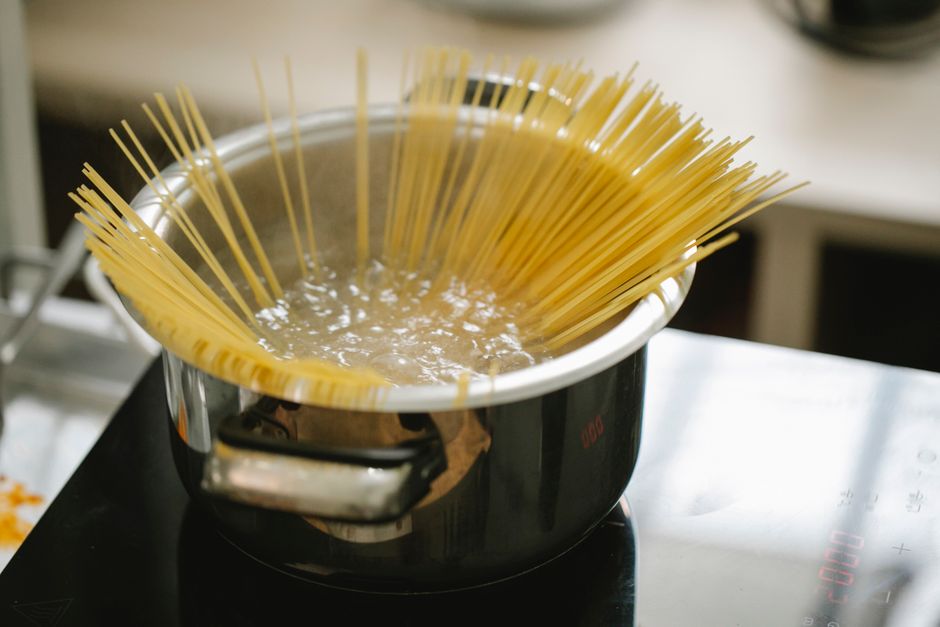
A: In an 8-quart pot with a tight lid, on a high BTU gas burner, about 12–15 minutes for a full pot of water. On a standard electric coil? More like 18–22 minutes. An induction burner is fastest — sometimes under 10 minutes. A lid shaves 2–4 minutes off regardless of your stove type.
Q: Can I use a pasta pot on an induction stovetop?
A: Only if the bottom is magnetic stainless steel or cast iron. Most quality stainless pots like Cuisinart and All-Clad are induction compatible. Check the box specifically for the induction symbol — it's a coil icon. GreenPan's Venice Pro line is explicitly induction-ready.
Q: Is it worth spending $200 on an All-Clad pasta pot?
A: Depends entirely on how you cook. If pasta is a weekly staple for years to come and you keep cookware forever, yes — All-Clad will still be performing in 30 years. If you move often, cook pasta occasionally, or just don't want to spend that much on a single pot, the Cuisinart at $60 does the core job beautifully.
The Bottom Line
The Cuisinart Chef's Classic 12-Quart with the pasta insert is where I'd send most people — it's genuinely good, it's affordable, and the insert alone changes the experience of making pasta on a weeknight. If you've got the budget and the commitment, All-Clad D3 is a pot you'll use for decades. And if cabinet space is your number one concern, the Calphalon strainer-lid design is a smart, underrated solution. Pick based on your kitchen reality, not aspirational cooking habits — and once you have a pot you actually like, you'll find yourself making pasta more often just because it doesn't feel like a production anymore.