Best Stovetop Espresso Maker (Moka Pot) for Strong Coffee at Home
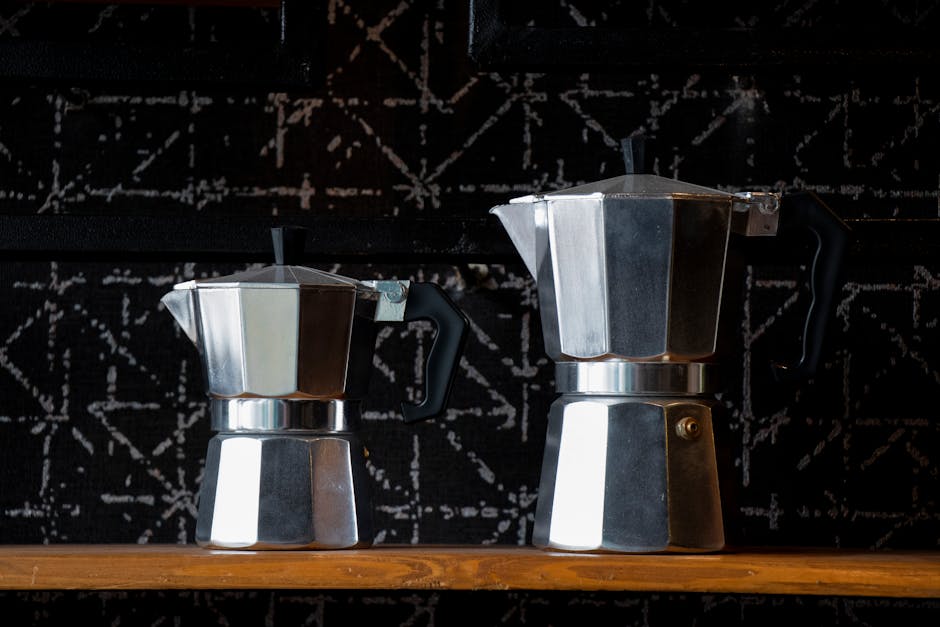
If you've ever tasted coffee made in a moka pot and thought "wait, this is better than most coffee shops I've been to" — yeah, same. These little aluminum or stainless steel pots have been making ridiculously strong, espresso-adjacent coffee since 1933, and honestly the basic concept hasn't needed to change much. The trick is picking the right one, because not all moka pots are created equal and a bad one will make your coffee taste like burnt metal.
Heads up: some links below are affiliate links — if you buy, we get a small cut at no extra cost to you.
What Even Is a Moka Pot and Why Should You Care
Quick primer for anyone new here. A moka pot works by forcing boiling water up through a basket of ground coffee using steam pressure. You fill the bottom chamber with water, pack the filter basket with fine-ground coffee, screw the top on, and set it on the stove. In about 4-5 minutes you've got 3 to 6 ounces of coffee so concentrated it'll make your eyes snap open.
It's not technically espresso — real espresso uses 9 bars of pressure, and moka pots max out around 1.5 to 2 bars. But the resulting coffee is thick, bold, and layered in a way that drip coffee will never touch. I've been using moka pots as my primary morning brew method for about six years now. I own four of them. My partner thinks that's absurd. She's wrong.
They're also cheap to buy, cheap to maintain, and basically indestructible if you treat them right. My 6-cup Bialetti has been through two moves and a minor kitchen fire incident (don't ask) and still works perfectly.
The Best Moka Pots Worth Buying Right Now
Here's where I'll give you my actual ranked picks, not just a generic list of whatever's on Amazon's first page.
1. Bialetti Moka Express — The Classic That Earned Its Reputation
This is the one. The octagonal aluminum pot with the little mustachioed man on the side. Available in sizes from 1-cup all the way up to 12-cup. The 3-cup ($35-40) is perfect for one strong person or two people who want a small cup each. Build quality is consistent, the safety valve works reliably, and replacement gaskets are easy to find because Bialetti sells them everywhere.
My one gripe: aluminum reacts slightly to acidic or salty water, so if your tap water is hard or weird-tasting, use filtered water or consider stainless. Also, don't put it in the dishwasher. Ever. It strips the seasoning and you'll taste it for weeks.
2. Bialetti Moka Induction — Same Soul, Works on Induction Stovetops
If you have an induction cooktop, the original Moka Express won't work because aluminum isn't magnetic. The Moka Induction solves this with a stainless steel base. Costs about $50-60 for the 4-cup version. Makes equally good coffee. The only downside is it looks slightly less cool than the classic, which matters to me more than I'd like to admit.
3. Cuisinox Roma — The Serious Stainless Upgrade
This is what I'd recommend if you want to spend a bit more and get something that lasts decades without any care concerns. Full 18/10 stainless steel, mirror polished, induction compatible, dishwasher safe (though I still wouldn't). The 6-cup runs around $65-75. The build is noticeably heavier and more solid than Bialetti's aluminum. Coffee tastes slightly different — cleaner, less mineral-forward, which some people prefer.
4. Alessi 9090 — The One You Buy If You Don't Care About the Price
Richard Sapper designed this in 1978 and it's still in production. Costs around $130-160 for the 6-cup. Is it better at making coffee than the $35 Bialetti? Marginally, maybe, if you push it. But it's genuinely beautiful to have sitting on your stove, and the locking mechanism on the lid is chef's kiss satisfying. If you cook in a nice kitchen and care about objects, you'll understand. If you just want coffee, get the Bialetti.
5. Grosche Milano — The Budget Pick That Overdelivers
Around $25 for the 6-cup. Stainless steel, induction compatible, looks clean and modern. I bought one for my office and was genuinely surprised. The gasket quality isn't quite as good as Bialetti long-term, and I've seen mixed reviews about the handle staying tight after a year of heavy use. But as a starting point or a secondary pot? Totally solid.
Moka Pot Comparison Table
| Moka Pot | Material | Induction | Price (6-cup) | Best For |
|---|---|---|---|---|
| Bialetti Moka Express | Aluminum | No | ~$38 | Classic gas/electric stovetop users |
| Bialetti Moka Induction | Stainless/Aluminum | Yes | ~$55 | Induction users who want the Bialetti feel |
| Cuisinox Roma | Stainless 18/10 | Yes | ~$70 | Durability-focused buyers |
| Alessi 9090 | Stainless | Yes | ~$145 | Design lovers, gift buyers |
| Grosche Milano | Stainless | Yes | ~$25 | Budget pick, beginners |
How to Actually Use a Moka Pot (Most People Get This Wrong)
The number one mistake people make is packing the coffee too tight. This isn't a portafilter. You fill the basket level and don't tamp it down. Tamping increases resistance, raises internal pressure, and either blows out the gasket or scorches your coffee. Both outcomes are bad.
Use medium-fine grind. Finer than drip, coarser than espresso. Most pre-ground coffee labeled "espresso roast" is actually too fine for a moka pot — it'll make bitter, sludgy coffee. I use a medium-fine setting on my Baratza Encore, but if you're buying pre-ground, Lavazza Super Crema or Illy Classico work really well.
Fill the water chamber to just below the safety valve. Cold water or pre-boiled water — there's a debate about this. I use cold water because I'm lazy and the coffee tastes fine. Some people swear that pre-heating the water means less time on heat and therefore less bitterness. Worth experimenting with.
Low to medium heat. Not high. The coffee should take 4-5 minutes to come through. If it comes out in 2 minutes at a hard gurgle, your heat is too high and you'll taste it. When you hear that hissing, sputtering sound at the end — that's your cue to take it off the burner immediately. That last bit of steam will make the coffee bitter if you let it cook.
Moka Pot Sizes: Which One Do You Actually Need
This trips people up because the sizing is counterintuitive. A "3-cup" moka pot makes about 3 espresso-sized cups, which is maybe 4-5 ounces of coffee total. That's one normal-sized American coffee mug, roughly. So if you drink one big cup in the morning, you want at least a 3-cup. Two people? Go 6-cup.
Here's the thing though — moka pots work best when filled completely. Running a 6-cup half-full produces weak, uneven extraction. So size matters in both directions. I have a 3-cup for mornings when my partner isn't home, and a 6-cup for weekends. That's why I own four (the fourth one lives at my parents' house, I'm not completely unhinged).
Common sizes: 1-cup, 3-cup, 6-cup, 9-cup, 12-cup. Most households land on 3-cup or 6-cup. The 1-cup ones are adorable but kind of annoying to use consistently.
What to Look for When Buying a Moka Pot
Material. Aluminum heats fast and makes great coffee but requires a little maintenance and won't work on induction. Stainless is more forgiving, dishwasher-friendly, induction compatible, and lasts longer without care.
Safety valve quality. This is the pressure release mechanism. On cheap pots, these can fail. On Bialetti, Alessi, and Cuisinox, they're reliable. I'd be cautious about no-name brands under $15 on Amazon — the safety valve on a pressurized cooker is not the place to cut corners.
Gasket and basket availability. Eventually your gasket will dry out and need replacing. Bialetti gaskets are sold at Walmart, Target, and a million online stores. Alessi parts are available but you'll pay more. Random brands? Good luck.
Handle comfort. You're handling a hot pot with a full chamber of boiling water. The handle needs to stay cool and feel secure. Most name brands get this right. Some budget options have handles that heat up or feel flimsy.
Frequently Asked Questions
Q: Is a moka pot the same as an espresso machine?
A: No, but they're in the same neighborhood. A real espresso machine uses 9 bars of pressure; a moka pot uses about 1.5 to 2 bars. The coffee is strong and concentrated, but technically it's stovetop coffee, not true espresso. Still absolutely delicious and strong enough to function as the base for lattes or americanos.
Q: Can I use a moka pot on an induction cooktop?
A: Only if it has a magnetic (stainless) base. Traditional aluminum moka pots like the Bialetti Moka Express will not work on induction. You'd need the Bialetti Moka Induction, the Cuisinox Roma, Alessi 9090, or Grosche Milano — all of which have stainless bases that induction cooktops can detect.
Q: Why does my moka pot coffee taste bitter?
A: Usually one of three things: heat too high, coffee ground too fine, or you let it sputter on the stove too long after it finished brewing. Pull it off the heat the moment you hear the hissing/gurgling at the end of the brew cycle. Medium heat, not screaming hot. And check your grind size — if it's espresso-fine, go slightly coarser.
Q: How do I clean a moka pot?
A: Rinse with hot water only. No soap, especially on aluminum — it strips the surface and messes with flavor. No dishwasher. Just rinse, dry, and leave the parts disassembled so the gasket breathes and doesn't dry-rot as fast. Takes about 90 seconds. Easy.
Q: How long do moka pots last?
A: A long time if you don't abuse them. My grandmother's Bialetti from the early 1990s still works. The gaskets need replacing every year or two depending on use, but the pot itself? Basically forever. The aluminum ones can pit or discolor over time, but that's aesthetic, not functional.
Q: What's the best coffee to use in a moka pot?
A: Medium to dark roast, ground to a medium-fine consistency. I like Lavazza Super Crema, Illy Classico, and Cafe Bustelo if you want something cheap and strong (Cafe Bustelo is a Cuban-style espresso grind that works surprisingly well in moka pots). Avoid single-origin light roasts — they tend to taste sour and thin when brewed this way.
The Bottom Line
If you want strong, rich, deeply satisfying coffee at home without spending $400 on a machine or waiting in line at a coffee shop, a moka pot is the most straightforward answer I know. Start with the Bialetti Moka Express if you have a gas or electric coil stovetop — it's $35-40 and it will outlast most of your other kitchen gear. Upgrade to the Cuisinox Roma or Alessi 9090 if you want stainless or just want something beautiful on your counter. The Grosche Milano is a perfectly respectable entry point if you want to keep it under $30. Whatever you choose, use low heat, stop tamping, and pull it off the stove the second it finishes — your mornings will genuinely improve.