Cast Iron Pan Smoking: Causes and How to Fix It
Heads up: some links below are affiliate links — if you buy, we get a small cut at no extra cost to you.
Your cast iron is smoking like a chimney and you're wondering if the pan is ruined, your kitchen is ruined, or maybe both. Relax. Cast iron smoking is one of the most common things I hear about from people who are new to the material — and honestly, even experienced cooks get tripped up by it. Most of the time it's totally fixable, and understanding why it's happening makes all the difference.
Why Cast Iron Smokes in the First Place
Here's the short answer: heat plus oil plus timing.
Cast iron holds heat differently than stainless or nonstick. It doesn't heat evenly super fast — it takes a minute to get there — but once it's hot, it stays hot. Really hot. That's the whole appeal. But it also means that if you throw oil into a pan that's already scorching, or if you used the wrong oil during your last seasoning session, you're going to see smoke.
There are basically three main culprits:
- The pan is too hot before you add oil or food
- The seasoning layer is burning off or was applied wrong
- You used an oil with a low smoke point
I've done all three. Last winter I blasted my Lodge 12-inch skillet on high for a full five minutes before adding a thin coat of olive oil. Rookie move on my part — olive oil has a smoke point around 375–405°F depending on how refined it is, and my pan was easily past 450°F. The whole apartment smelled like a bonfire.
Each of these causes has its own fix, and I'll walk through them one by one.
The Oil You're Using Is Probably the Problem
This is the big one. Most people don't think about smoke points until they're frantically fanning their smoke detector with a dish towel.
Smoke point is the temperature at which an oil starts to break down and produce visible smoke. Here's a quick reference of oils people commonly use with cast iron:
| Oil | Smoke Point (°F) | Good for Seasoning? | Good for Cooking? |
|---|---|---|---|
| Extra virgin olive oil | 375–405 | No | Low-heat only |
| Coconut oil | 350–385 | Not ideal | Low-medium heat |
| Vegetable oil | 400–450 | Decent | Yes |
| Canola oil | 400–450 | Decent | Yes |
| Avocado oil | 480–520 | Yes | Yes |
| Flaxseed oil | 225 | Controversial | Not really |
| Crisco (shortening) | ~360 | Traditional pick | Low-heat only |
| Grapeseed oil | 420–445 | Yes | Yes |
Flaxseed oil is interesting — there was a period where it was the darling of the cast iron internet because it supposedly creates the hardest seasoning layer. And it does bond well. But it smokes at only 225°F, which is almost nothing. I tried it. I do not recommend it for actual cooking.
My personal daily driver for both seasoning and high-heat cooking is avocado oil. Specifically, I grab Chosen Foods 100% Pure Avocado Oil from Costco — it's affordable in bulk and handles a 500°F oven without any drama. For seasoning specifically, a thin wipe of Crisco is still what my grandmother used and still what works great if you're doing lower-temp oven seasoning around 350–375°F.
The fix: Match your oil to your cooking temperature. Cooking a steak on screaming-high heat? Use avocado oil or grapeseed oil. Doing eggs on medium-low? Butter or even olive oil is fine.
Your Seasoning Layer Is Broken, Burnt, or Gummy
This one sneaks up on people. The seasoning on cast iron isn't a coating in the traditional sense — it's polymerized oil that's been baked into the pores of the iron. When it's done right, it's basically invisible and doesn't smoke under normal conditions. When it's done wrong? It smokes, it flakes, it stinks.
Gummy seasoning is probably the most common issue. This happens when you applied too much oil during seasoning and it didn't fully polymerize — it just sat there as a sticky, half-baked layer. When you heat the pan, that gummy residue burns. And it smokes.
I see this all the time in Facebook groups. Someone re-seasons their Lodge, puts it in the oven at 450°F, and then complains it's smoking horribly. Nine times out of ten they wiped on a heavy coat of oil instead of a thin one.
The rule: When seasoning cast iron, apply oil, then wipe 95% of it back off. The layer should look like there's almost nothing there. Then bake at 450–500°F for an hour, and let it cool in the oven.
Burnt or flaking seasoning is a different issue. This happens when the pan gets overheated repeatedly without being re-seasoned, or when acidic foods (tomatoes, citrus, wine sauces) strip the seasoning down to bare metal. Bare iron oxidizes and smokes at high heat.
The fix here is a full re-seasoning, which I'll cover next.
How to Re-Season a Cast Iron Pan the Right Way
If your pan is smoking no matter what you do, it's time to start fresh. This isn't complicated, but it does require some patience.
Step 1: Strip the old seasoning. You can scrub with coarse salt and a little oil, or — if things are really bad — run it through the self-clean cycle on your oven. Yes, really. The self-clean cycle hits around 900°F and basically incinerates everything on the pan. Pull it out after it cools, and it'll look orange and rusty. That's normal. That's bare iron.
Step 2: Wash and dry immediately. Scrub off any ash, rinse, then put it on the stove over medium heat to evaporate every drop of water. Don't skip this step. Cast iron rusts fast when wet.
Step 3: Apply a thin coat of oil. I use avocado oil or grapeseed oil for this. Wipe it all over the entire pan — inside, outside, handle — then wipe almost all of it off with a clean cloth. Seriously, it should look nearly dry.
Step 4: Bake upside down at 450–500°F for an hour. Put foil on the rack below to catch drips. Let the pan cool in the oven.
Step 5: Repeat 3–4 times. One layer of seasoning isn't enough. I usually do four rounds before a pan feels right. After the first cook or two of fatty foods — bacon works great — it starts to really come together.
Lodge pans come pre-seasoned from the factory, and honestly that factory seasoning is fine but thin. I always do two or three extra seasoning rounds before trusting a new Lodge with anything delicate.
Heat Management: The Part Nobody Talks About Enough
Even with perfect seasoning and the right oil, you can still smoke out your kitchen if you mismanage heat. Cast iron and high heat is a great combination — for searing steaks, getting a crust on chicken thighs, making smash burgers. But there's a right way to get there.
Don't preheat on high. I know it feels counterintuitive, but cast iron responds better to a slower, more even preheat. Start on medium. Give it 3–4 minutes. Then nudge it up to medium-high if you need it. This prevents hot spots and reduces the chance of the pan surface hitting smoke-point temperatures before your food hits it.
Add oil to a warm — not scorching — pan. Watch for the oil to shimmer, not smoke. Shimmer means it's ready. Smoke means you waited too long.
Don't leave an oiled empty pan on high heat. This is how people end up with scorched, smoking pans that they think are "broken." The pan isn't broken. It just got too hot with oil sitting in it.
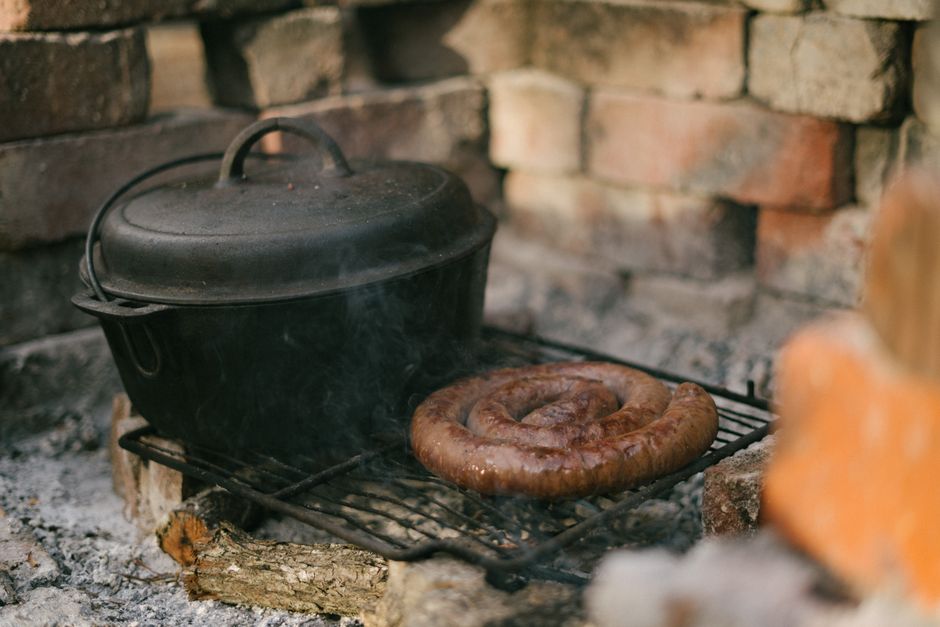
One practical tip: if you're cooking outdoors on a camp stove or grill, cast iron can hit 600°F+ over open flame really fast. Use higher smoke-point oils outdoors, always.
When Smoking Is Actually Normal (And You Can Ignore It)
Here's something nobody tells beginners: a little smoke when you first heat cast iron is not always a problem.
If you've just re-seasoned a pan, the first few uses will sometimes produce a small amount of smoke as the new seasoning continues to cure and the oil finishes polymerizing. That's fine. It should diminish over the first few uses.
If you're searing meat at 475°F, there will be some smoke from the meat drippings, fat rendering, and sugars burning. That's cooking, not a malfunction. Run your range hood fan and crack a window. That's normal kitchen life.
What you should NOT see: thick, black, acrid smoke with a chemical or plasticky smell. That means something is genuinely wrong — usually old, rancid oil residue or a seasoning layer that's gone bad and needs to be stripped and redone.
A light haze? Normal. Visible billowing smoke that triggers the detector? That needs addressing.
Frequently Asked Questions
Q: Is it safe to use a cast iron pan that's smoking?
A: Depends on why it's smoking. Light smoke from high-heat cooking or a new seasoning cure is totally fine. Heavy, chemical-smelling smoke from burning rancid oil or a bad seasoning layer — don't keep cooking on that. Strip it and re-season before using it again.
Q: Why does my cast iron smoke but my stainless pan doesn't?
A: Cast iron retains heat much more aggressively than stainless. It can reach and hold higher temperatures on the same burner setting, which means oil hits its smoke point faster. It's not that cast iron is worse — it just requires more awareness about temperature management.
Q: Can I use butter in my cast iron without it smoking?
A: Yes, but only at lower to medium heat. Butter has a smoke point of around 302–350°F, so it's great for eggs and sautéed vegetables but not ideal for searing steaks. Clarified butter (ghee) has a much higher smoke point — around 450°F — and works better for higher-heat applications.
Q: My brand new Lodge pan is smoking on its first use. What's happening?
A: Lodge pre-seasons their pans with vegetable oil in the factory. That factory seasoning is thin and sometimes a little uneven. A little smoke on the first heat-up is common. Give it a few cooks, or do a couple of extra seasoning rounds yourself, and it'll settle down.
Q: How do I know if my cast iron seasoning has gone bad?
A: Look for flaking, rust spots, a grayish or patchy surface, or a rancid smell when heating. Any of those signs mean the seasoning has broken down and needs to be stripped and redone. A healthy seasoning looks dark, smooth, and relatively uniform.
Q: Does cooking spray damage cast iron?
A: Actually, yes — over time. Aerosol cooking sprays like PAM contain propellants and additives that build up on cast iron as a sticky, gummy residue that's really hard to remove. That residue smokes and eventually makes the seasoning patchy. Stick to pure oils instead.
The Bottom Line
Cast iron smoking is almost never the end of the world, but it is usually a signal that something needs attention — whether that's your oil choice, your heat management, or the condition of your seasoning. Fix those three things and the smoking stops. A well-maintained cast iron pan — a $30 Lodge or a $200 vintage Griswold — should cook beautifully without filling your kitchen with smoke every time you turn on the burner. Take care of the seasoning, respect the heat, and pick the right oil. That's really all there is to it.